DESIGNED BY RIDERS, FOR RIDERS


Saddle Pads That Support Your Horse: How to Choose the Right Model and Fit
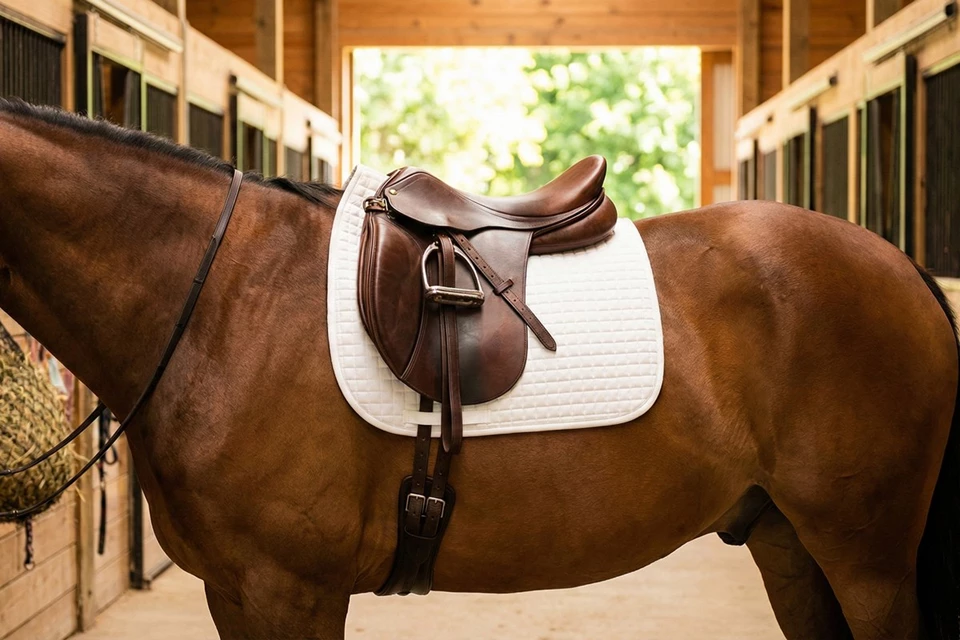
A saddle pad is more than a colorful accessory. It is a vital interface between the horse's back and the leather saddle. Beginners often choose pads based on color or pattern. However, the technical function of a saddle pad (or saddle cloth) is to absorb sweat, distribute pressure, and protect the horse's skin from friction.
The wrong pad causes heat buildup and painful pressure points. This leads to "cold-backed" behavior or long-term muscle damage. Choosing the right model requires an understanding of your saddle type and your horse's anatomy.
Understanding the Different Shapes
Saddle pads are shaped to match the cut of specific saddles. Using the wrong shape interferes with the rider’s leg aids and the horse’s movement.
Dressage Pads
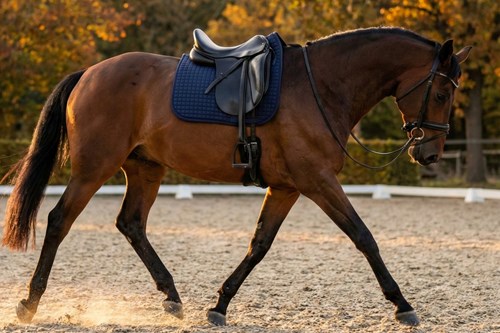
These are rectangular and long. They match the long, straight flaps of a dressage saddle. A dressage pad must be deep enough to cover the entire flap. If the pad is too short, the edge of the saddle flap will rub against the horse's ribs.
Jumping and Close Contact Pads
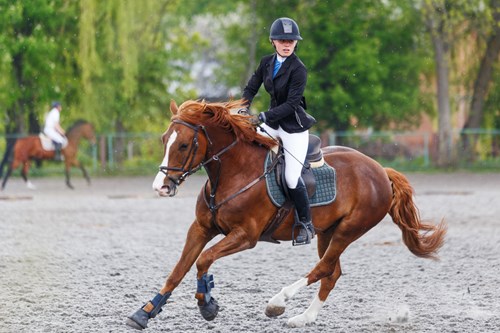
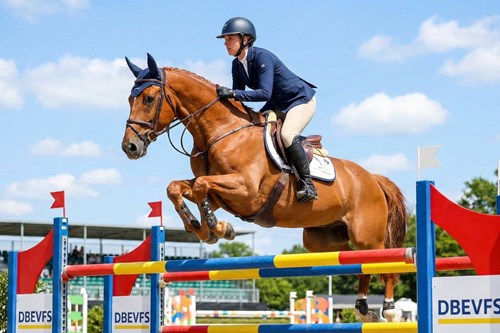
These pads feature a forward-cut shape. They follow the forward curve of jumping saddle flaps. They are shorter in length to allow the rider’s leg to have closer contact with the horse.
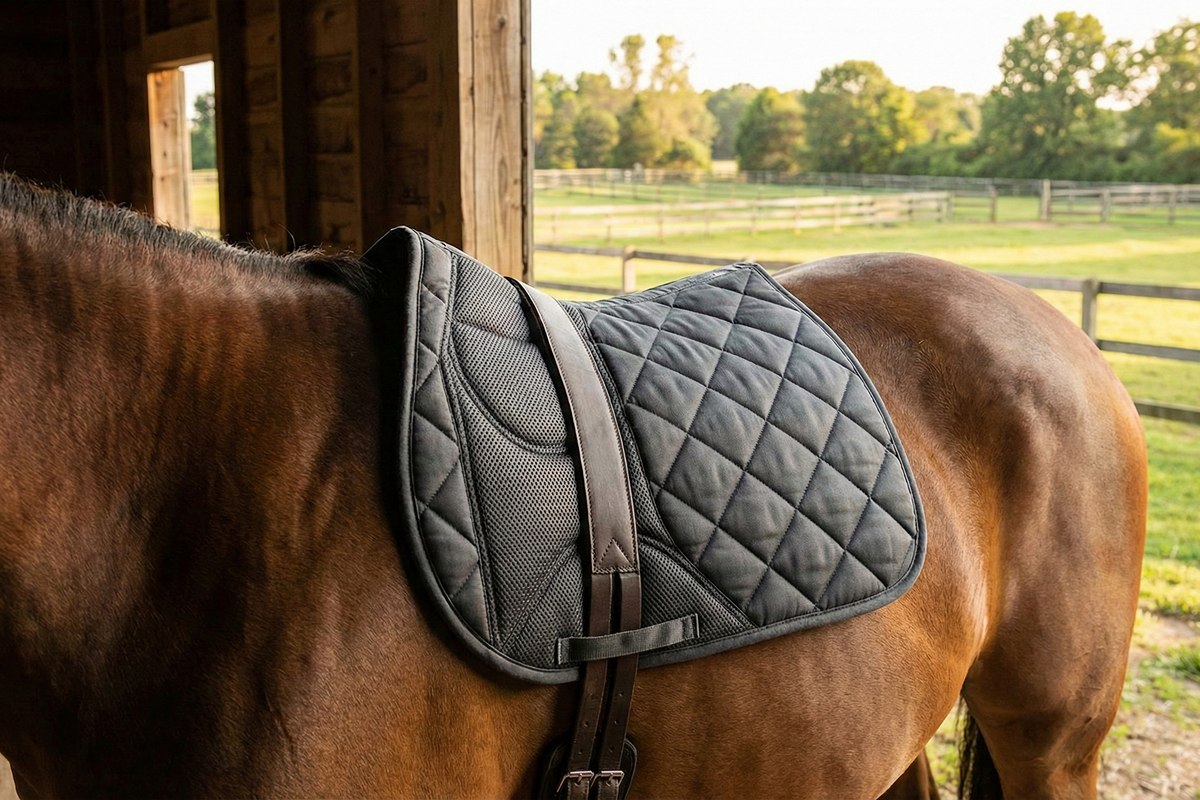
Material Matters: What Is Under the Saddle?
The material determines how well the pad manages heat and moisture.
- Cotton: The most common material. It is breathable, easy to wash, and natural. However, thin cotton provides very little shock absorption.
- Sheepskin (Numnah): Provides excellent pressure distribution and temperature regulation. Real sheepskin stays cool in summer and warm in winter. It is ideal for horses with sensitive skin.
- Memory Foam and Gel: These are technical inserts. They help compensate for minor saddle fit issues and absorb high-impact shocks during jumping.
How to Ensure a Perfect Fit
A pad that sits flat against the horse's spine is dangerous. It creates downward pressure on the withers.

The "Wither Clearance" Rule
When you place the pad and saddle on the horse, you must pull the pad up into the gullet of the saddle. There should be a clear tunnel of air over the spine. You should be able to fit at least two fingers between the top of the pad and the horse's withers.
Size Alignment
The pad should extend at least 2-3 cm beyond the edge of the saddle all the way around. If the saddle sits on the binding (the edge) of the pad, it creates a hard pressure line. This is a common cause of white hairs and sores.
Saddle Pad Comparison Table
|
Pad Type |
Best For |
Material Benefit |
Fit Focus |
|
Cotton Quilted |
Daily Training |
High breathability |
Easy to wash |
|
Sheepskin Half-Pad |
Sensitive Backs |
Natural shock absorption |
Requires wider saddle |
|
Technical Gel Pad |
High Impact / Jumping |
Corrects minor balance |
Non-slip stability |
|
Wicking Mesh Pad |
Hot Climates |
Rapid sweat evaporation |
Maximum airflow |
Caring for Your Saddle Pads
Salt from horse sweat dries into hard crystals. These crystals act like sandpaper against the horse's skin. Wash your pads regularly. Always use a gentle, non-biological detergent. Before washing, use a stiff brush to remove dried hair and dirt. This protects your washing machine and ensures a deeper clean.
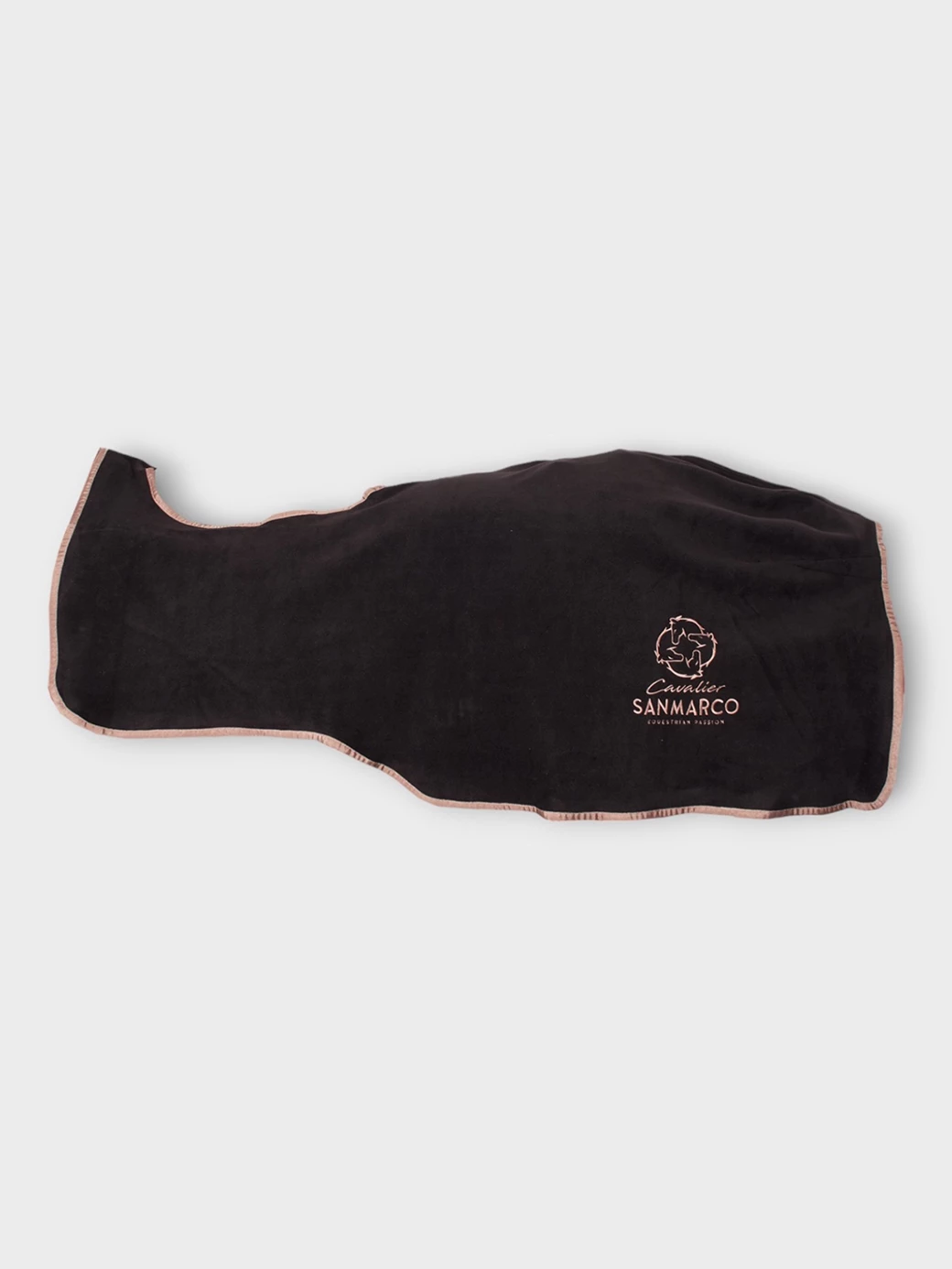
The right saddle pad supports your horse's performance by ensuring comfort. At Cavalier San Marco, we combine technical fabrics with elegant designs. Our pads provide the necessary support while maintaining the sophisticated look every rider desires.