DESIGNED BY RIDERS, FOR RIDERS


10 Common Horse Riding Mistakes by Beginners: How to Fix Them?
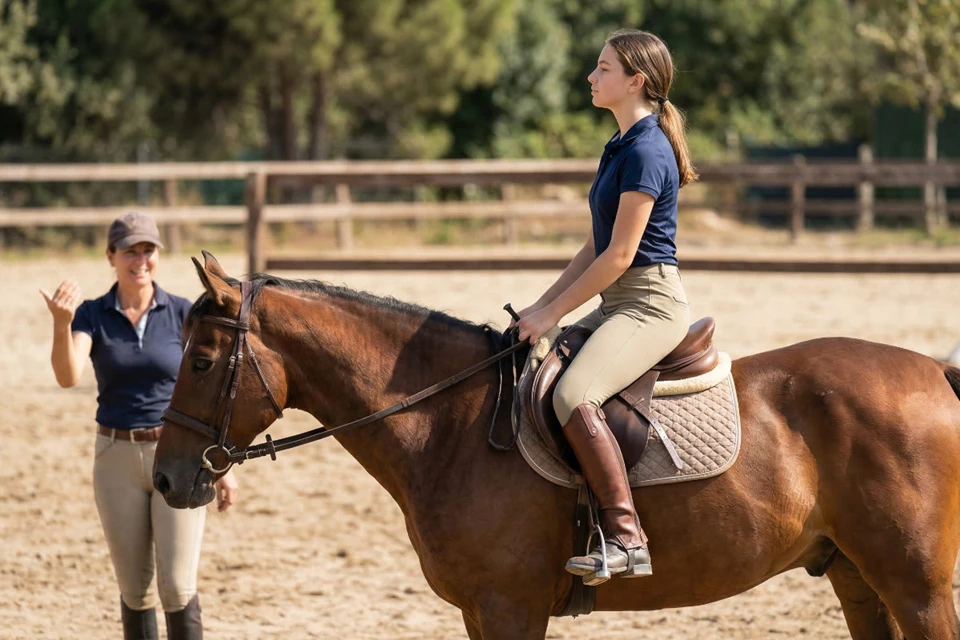
Every new rider stepping into equestrian sports inevitably makes biomechanical and reflexive mistakes while discovering new muscle groups. Perfect form is not expected in the first lessons or months in the saddle. Mistakes are a natural part of the learning process. The key is to diagnose these reactions early and replace them with correct muscle memory before they turn into permanent habits.
Below are the 10 most common mistakes you might face in your early steps in the saddle, clear solutions to fix them, and an in-depth look at bit contact, which is the heart of equestrian communication.
1. Looking Down (Focusing on the Horse's Neck)
Human nature instinctively prompts us to look down when we reach a high place or sense danger. Looking down while riding is a major balance issue. Your head is a heavy organ. When you look down, your shoulders drop. Your center of gravity shifts forward.
-
How to Fix: Always keep your chin parallel to the ground. Fix your gaze through the horse's ears towards the horizon. Watch your path instead of your horse's neck.
2. Raising the Heels
In moments of anxiety, riders often display a reflex of squeezing their knees and lifting their heels into the air, which completely distances the lower leg from the saddle. A leg moving away from the saddle instantly ruins your balance. You become vulnerable to falling.
-
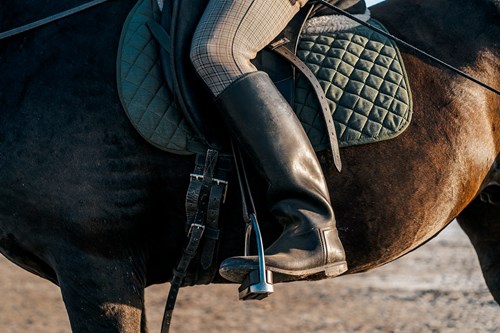
How to Fix: Stretch your weight down from your calves into your heels. Your toes should point toward the horse's shoulder. Your heels must be the lowest point of your body.
3. Bouncing Uncontrollably in the Saddle
When transitioning to the trot, many new riders fail to adapt to the horse's rhythm and bounce like a sack on the saddle. This uncontrolled movement causes severe discomfort to both the rider's spine and the horse's back. Developing a rhythmic seat is an entirely technical process. You must review our educational content titled How to Stop Bouncing on the Saddle and Sit Properly on a Horse: A Guide for Beginners to solve this problem from its roots.
-
How to Fix: Keep your lower back and pelvis supple. Do not reject the horse's movement with locked muscles. Learn to absorb the motion like a shock absorber.
4. Holding the Reins Too Long or Too Short
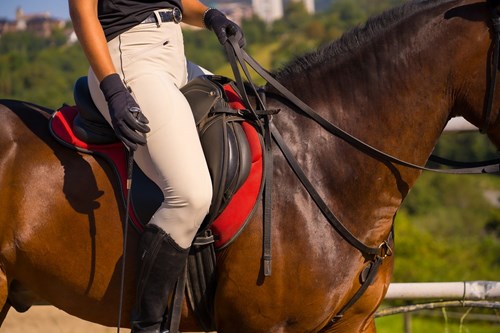
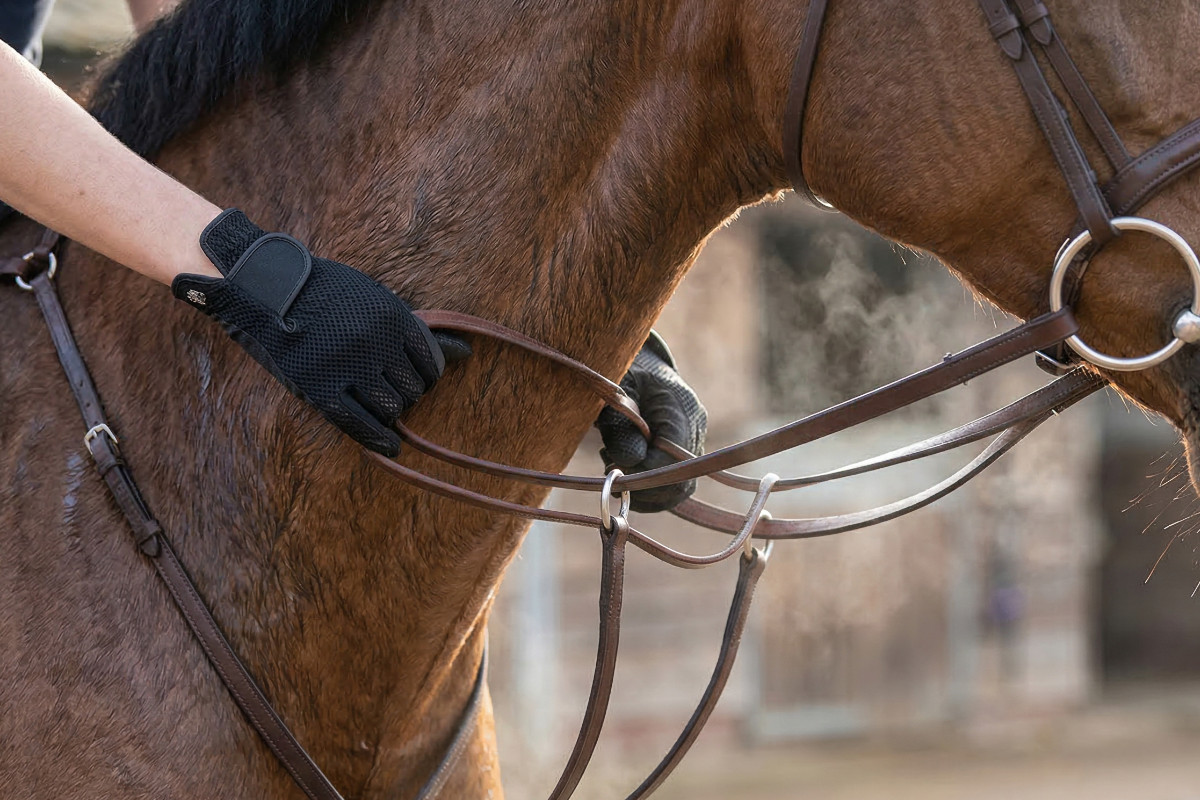
The reins are the main line of communication between the horse's mouth and your hand, and the tension of this line forms the foundation of riding. Leaving the reins too long causes you to lose control. Holding them too short applies constant pressure to the horse's mouth. The horse tosses its head to escape this pressure.
-
How to Fix: Create a straight line from your elbow to the horse's mouth (the bit). Your contact should be light but continuous.
5. Gripping the Saddle Only with the Knees
When experiencing a fear of falling, the body reflexively tries to clamp the saddle with the knees like a vise. When you squeeze your knees, your lower leg moves away from the horse's barrel. This position pushes you upward in the saddle. Your physical integrity is compromised.
-
How to Fix: Softly rest the inside of your calves against the saddle. Relax your knees. Allow your legs to drape and wrap the horse's barrel naturally.
6. Unsteady Hands (Hands Hovering in the Air)
The rider's hands must always adapt to the horse's gait rhythm and avoid unnecessary up-and-down movements. Holding your hands too high in the air creates unbalanced pressure in the horse's mouth. The horse cannot understand your steering commands. The horse gets confused.
-
How to Fix: Keep your hands just above the pommel of the saddle. Leave about a hand's width of space between your two hands. Keep your elbows slightly close to your body.
7. Leaning Forward (Entering the Fetal Position)
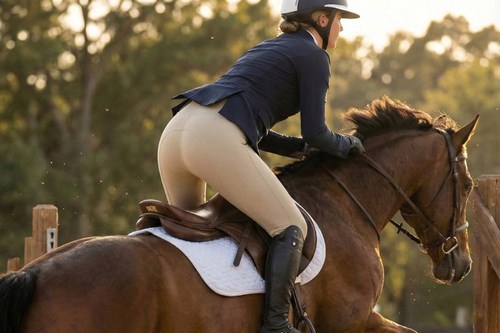
A feeling of insecurity pushes the rider to lean forward, drop their shoulders, and collapse onto the horse's neck. This slouched posture places your center of gravity directly onto the horse's shoulders. If the horse stops suddenly, your risk of falling over its neck increases.
-
How to Fix: Roll your shoulders back. Open your chest. Keep your spine straight. Distribute your weight equally across both of your seat bones.
8. Holding Your Breath
When learning a new movement or when the horse speeds up suddenly, riders unknowingly hold their breath and lock all their muscles. Oxygen-deprived muscles lose their elasticity rapidly. The horse also feels this physical tension from you. The horse becomes stressed.
-
How to Fix: Take deep, rhythmic, diaphragmatic breaths. Exhale audibly during moments when you feel challenged.
9. Rising on the Wrong Diagonal in Posting Trot
Rising simultaneously with the horse's correct outside front leg in posting trot is one of the most critical rules of balance and gait fluidity. Rising on the wrong diagonal instantly disrupts the horse's balance. It makes the gait uncomfortable.
-
How to Fix: Rise from the saddle when the outside front leg extends forward. Do not tilt your head down. Follow the horse's shoulder movement from the corner of your eye.
10. Leaving the Steering Solely to the Reins
Using only the hands and reins to steer or stop the horse is the most common mechanical fallacy resorted to by beginners. Real riding is done with the center of gravity, seat bones, and leg aids. Reins are always the last resort of support.
-
How to Fix: Turn your gaze toward the direction you want to go during turns. Put your weight into the saddle before pulling the reins to stop. Close your legs.
In-Depth Focus: Bit Contact and Hand Sensitivity
The physical connection established by the bit at the end of the reins with the horse's highly sensitive mouth tissue is the most delicate form of communication in riding, requiring great mastery.
Many new riders view the reins as a tool for holding on. The metal in the horse's mouth presses directly on its gums and tongue. Rough and sudden hand movements hurt the horse. The horse raises its head high to escape this pain. It ruins the rhythm of the gait. Sometimes it prefers to stop completely due to the pain.
Ideal contact should be like a flexible rubber band. Imagine a straight line from your elbow to the horse's mouth. When the horse stretches its head forward, your hands should follow this movement softly. Your fingers should grip the reins just like holding a small bird. The bird should not escape. The bird should not be crushed between your fingers. Developing this fine hand sensitivity ensures the horse trusts you and your hands.
Perfecting your posture and commands in the saddle takes time. Horse riding is a wonderful discipline that requires great patience. Realizing your shortcomings is the biggest step in development. Focus on just one single point in your next training session and enjoy your bodily awareness.