DESIGNED BY RIDERS, FOR RIDERS


How To Stop Bouncing On The Saddle And Sit Properly On A Horse: A Guide For Beginners
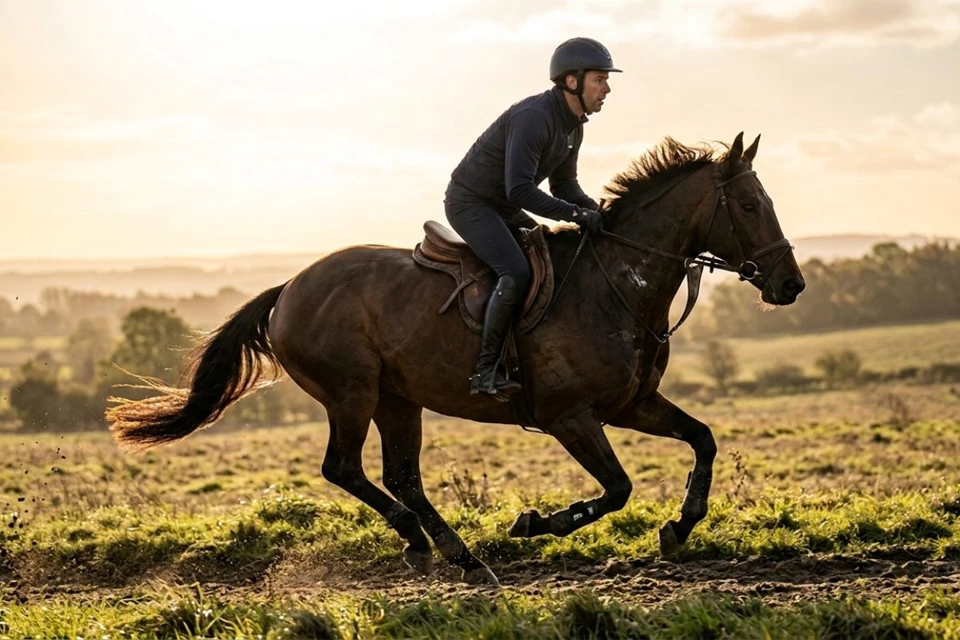
Are you struggling to sit properly on the horse while galloping?
Do you keep bouncing on the saddle, and is the saddle hitting you back on the spine, causing back pain?
Do your legs go everywhere while your instructor keeps shouting to hold them steady?
Do you have trouble understanding how to keep your hands still and silent while your horse is banging his head up and down like a rock star?
If you are suffering some or all the issues listed above, don’t worry, we all have been there. Keep reading to hopefully understand how you can improve your riding and seat.
My name is Cemal Karabel, one of the founding partners of Cavalier SanMarco. My love for horses and riding is what brought me to where I am today – even though I only started riding at age 38. That alone proves it’s never too late to learn! It has now been over ten years since I first got on a horse, and I continue to learn something new with every ride, every horse, and every lesson. As someone who began later in life and walked the long, sometimes painful path of learning to ride, I’ve always wanted to share the things that helped me. Eventually, I realized that my experiences as a student might offer beginners a more relatable way to understand certain concepts. No matter how professional your instructor is, a beginner will often understand another beginner’s feelings and struggles more clearly.
First of all, riding is a process and it takes time and practice to improve. So, it is not going to happen in one day.. be patient, be persistant and keep on working, you will see that you will eventually get there…
When I started riding, my instructor was telling me all the right things: move with the horse, keep your legs steady, heels down, fix your hands, don’t bounce…
Well, it was easy to say, easy to understand what is being asked, but almost impossible to execute on a giant and constantly moving beast.
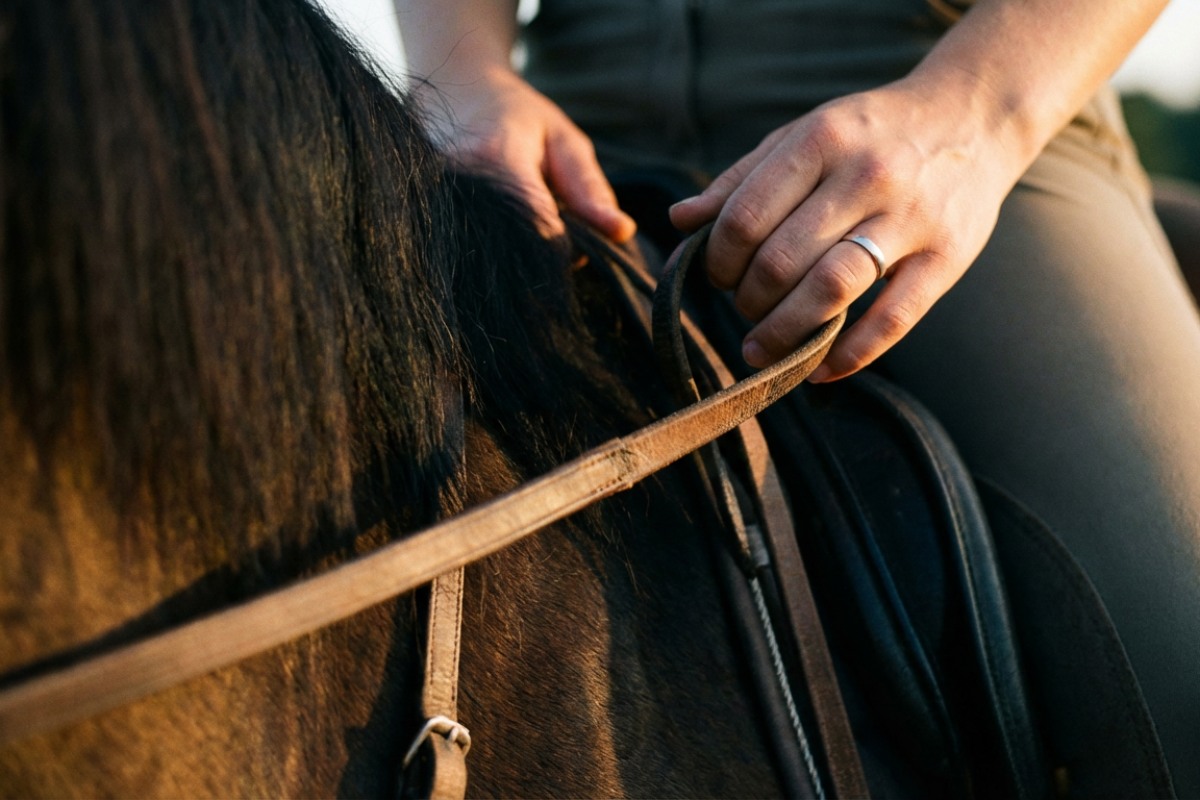
My legs were going all over, the saddle was hitting my spine and my hands went up and down as my horse was moving his head up and down.
No matter how many times my instructor repeated himself, and no matter how many times he would go on the horse to show me how it is done, I simply couldn’t do it properly.
In my first months, I hurt my back so badly from the constant impact that I had to stop riding for six months on doctor’s orders. Ironically, I now ride to strengthen my back muscles, as riding—done correctly—helps me manage my Grade 1 lumbar disc issue. So, for those with back concerns: proper riding technique can actually help you. Don’t assume that spinal problems make riding impossible. Often, the opposite is true.
My instructor was very experienced and professional, yet we were unable to fix my seating! problems. I also wasn’t the most naturally talented student anyway. I was looking for solutions online, reading forums and advice from various riders about how they would solve the issues. There were countless suggestions: sit tall, be like a jelly on the seat, have a light seat, stand on your stirrups, relax everything… almost all of them partly true, but none solving 100% of the problem. How could I be sitting my bottom like a jelly and pressing hard on the stirrups at the same time? One was contradictory to the other. As you would go relaxed on the seat, your legs, naturally, tended to be light as well on the stirrups. And when I pressed hard on the stirrups, I was not able to sit relaxed on the saddle as my upper body would be all together stiff all the way through. And finally, how could I keep my reins steady and hands silent right above the saddle while my horse would bang his head like a rock star during gallop. Sounds familiar?
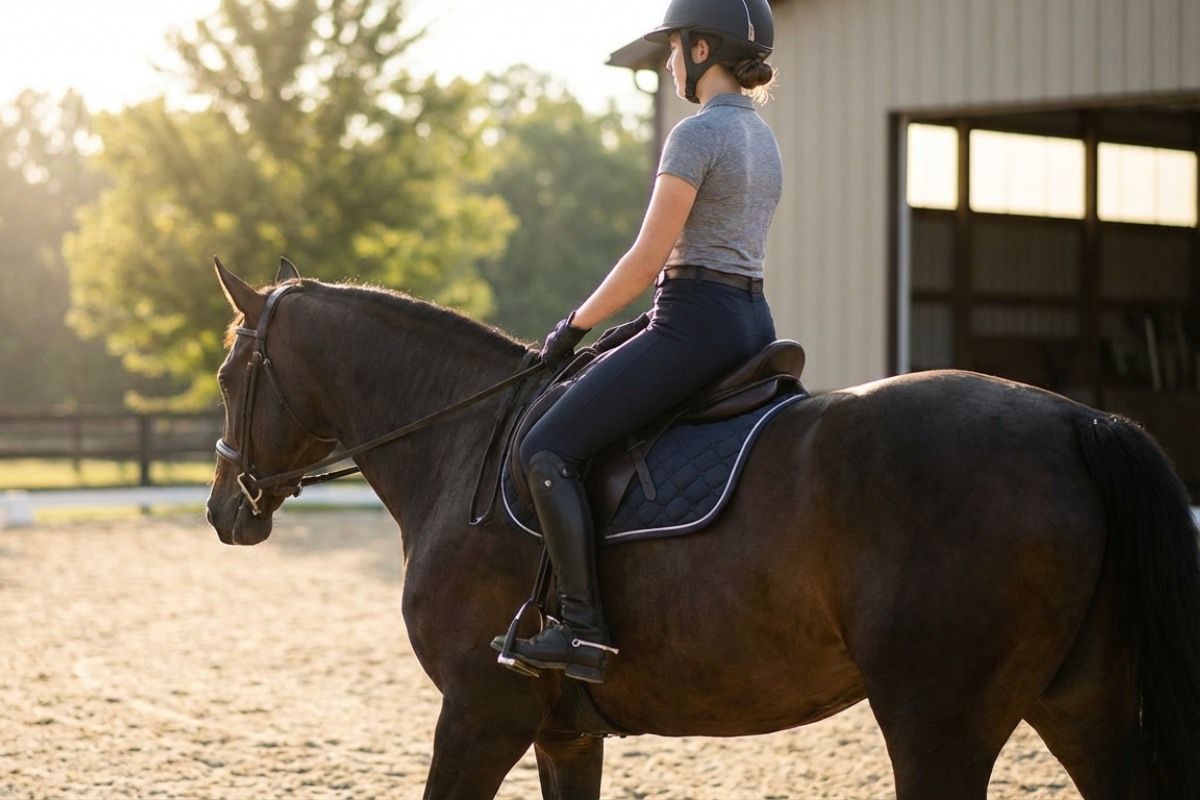
The good thing is: all have a reason and solution, and anyone can make it…
So, in time, as I practiced, I happened to understand why despite all the clear instructions and information I got from my instructor and other sources did not work. My instructor had been riding since childhood, so it was difficult for him to remember what beginners truly struggle with. And then, my body was not trained to process the told instructions coming from the instructor, because it wouldn’t know how to do it.
Anyway, I found out (after some time and a lot of training) that the biggest problem I had was I was moving my body as a whole and most of the time, I was too stiff on the horse.
Well, first of all, it was perfectly normal to be like this at the beginning stages. You are getting on a big and powerful animal whose actions are unpredictable to you and you need to be cautious at all times not to fall. This is an automatic response of the body, you are nervous, unsure and alert and your body prepares itself against the worst as a defence mechanism. As a beginner, I had many thoughts and fears battling inside my head: Will the horse do something unexpected if I do something wrong? Will he start running wildly out of control if I touch him wrongly? Will he be disturbed and kick me off if I pull the reins too hard and hurt him?
I am sure, most of the beginners have similar and many more thoughts going through their minds while they ride for the first times.
Here’s how I eventually worked through these challenges:
Get to know your horse: Relax
Good news everybody: if you ride at a proper riding school or club, your horse will not do any of the above as your instructor will most likely pair you with an experienced and calm horse who will be suitable for the beginners. And besides that, as you get to know horses, you will discover that they are very obedient, tolerent and good mannered animals with a gentle soul and character. They are also so strong that your pulling and legging will hardly hurt them. So, as you get to know the horses and understand the way they react and behave, you will be more relaxed on the horse which could be the number one rule when riding the horse. Be relaxed, first in mind and then in body, to have a smoother ride. As you relax, you will immediately experience the horse will relax as well, as they have an incredible talent of feeling the rider and reflecting their emotional state.
Walking a bit long with loose reins can help you and the horse relax before starting the lesson.
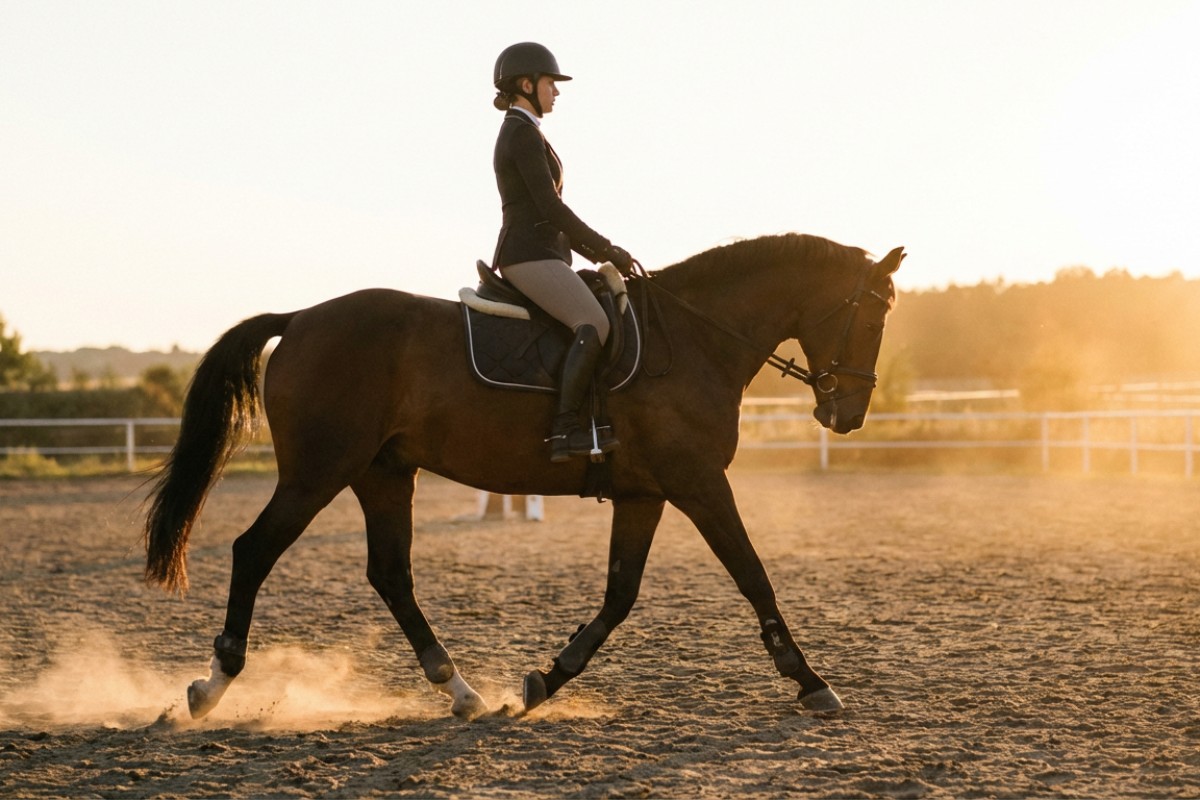
Split your body into parts and learn to control each one separately:
This is the most tricky and difficult part of the task, but maybe is the key and the secret to the solution of many problems. First of all, there is no magic stick to make it happen just like that. It takes a lot of time and practice to get there and as my instructor says “this is a kilometers business”.
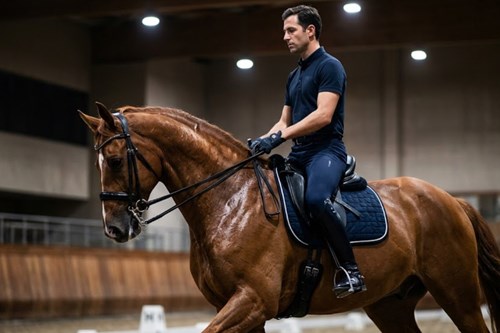
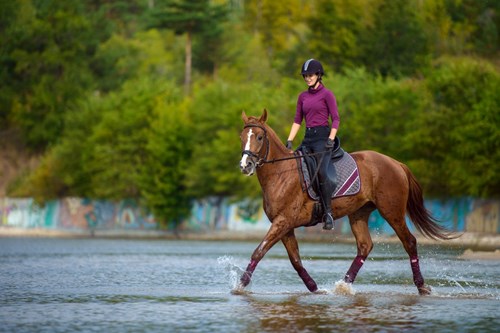
So, how to make it in theory: imagine a wooden log put on the stirrups, stiff and not flexible. It would bounce big time with every move of the horse. Now, you don’t want to be that log. Your body must learn to function in coordinated yet independent parts!
What does it mean then?
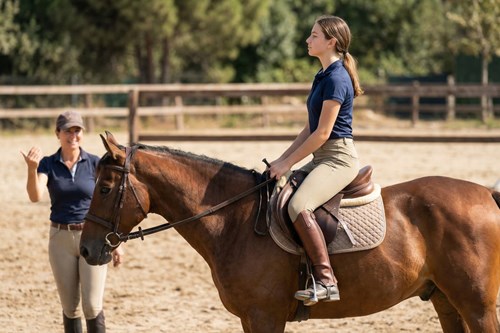
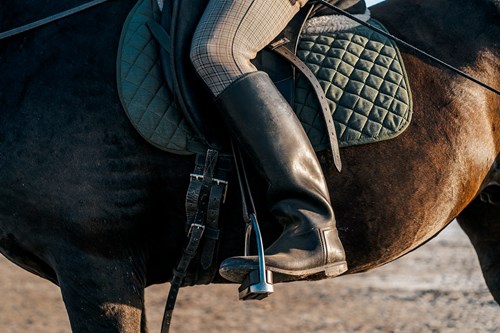
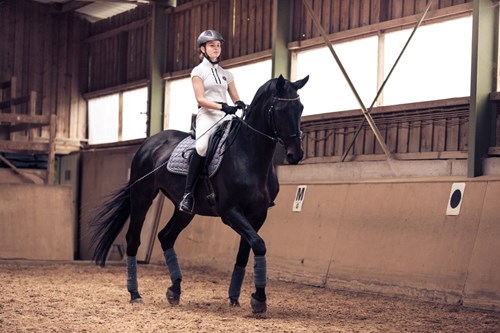
Feet: Your foot ankles must be soft like a flexor, and it will act to absorb the movements coming from the ground. As you trot and gallop, you will press on the stirrups with right pressure, a pressure enough to push the heels down to sit and hold in a balance on the horse and soft enough to let it absorb the movement of the horse and not to reflect it to the upper body. Consider it as a car’s suspension.
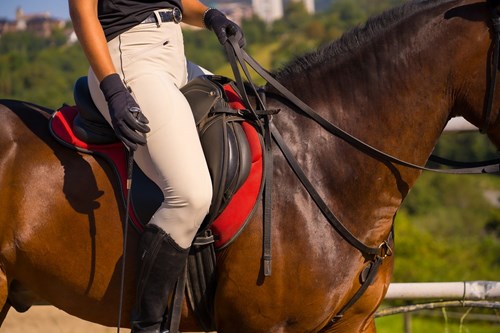
Legs: Next, your inside legs and thighs. You need to learn to squeeze and wrap this part of your body to hold on to and feel the horse. Again you will not squeeze it strongly in such a way that will eventually tire you, but you need to squeeze with a gentle, natural and effortless pressure to let him know you are there and holding onto him. They need to stay stable and steady just behind the girth while knees are attached to the saddle, yet again not squeezing unnaturally.
The trick of the trade is to learn how to squeeze a part of your body, without squeezing the rest of it or even more while keeping the rest quite relaxed.
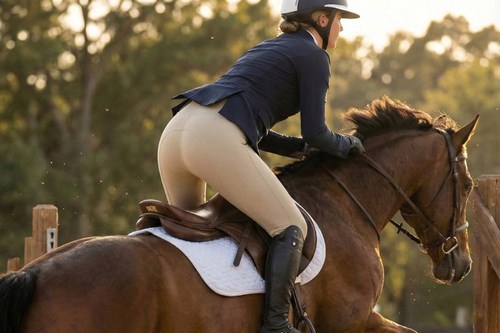
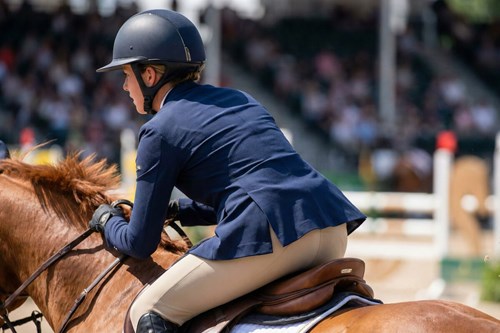
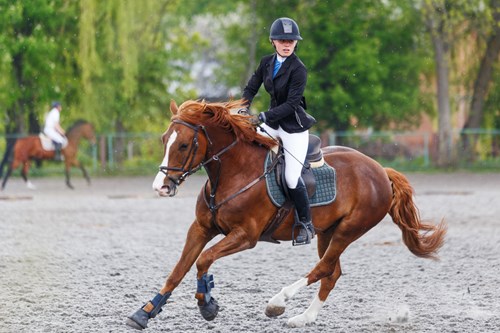
Belly: And the best part, you want your belly to be very soft and flexible like a belly dancer. You should sit on the saddle, with your center of gravity on your bottom and you literally move and syncronize with the horse’s movements. Remember your legs are still pressing on the stirrups, so try to feel and balance how much you press on the stirrups and how you distribute your weight between the seat and the legs. Because how light you sit on the saddle is related to how hard you press on your stirrups. There is a balance between the two and you shall learn how to distribute your weight by practicing. According to how you ride, deep seat canter, light seat or standing up canter, you will need to do that by balancing and distributing your weight between your legs(feet) and seat.
You shall not slide back and forth on the saddle, yet you have to move your belly with the horse, while the bottom and upper part of your body stays still in position. Try adapting to the horse’s movement during simple walk, moving your belly slightly and softhly without sliding. Basically, during canter you will be doing the same exact thing at a higher speed and a little more intense way. The softer and more relaxed you are, the smoother will be your seat and try to keep it as natural as you can, so no over acting with your belly. Just feel and keep on with the rythm, this is the only secret… relaxed, natural, syncronized
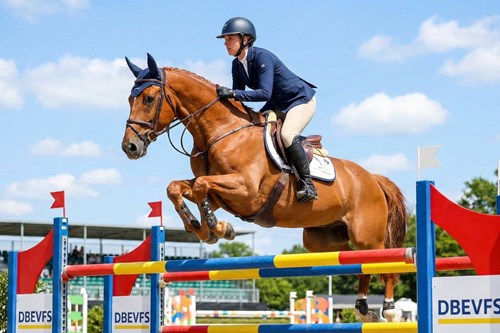
The upper body: This is the part you want straight and up. You want to sit tall, and sitting tall means a bit of weight on the stirrups, enough to help you move your belly smoothly on the saddle, and the upper body by sitting tall and looking forward again, distributes your body weight equally on the horse. Because if you don’t sit tall, and give all your weight to your bottom, you will have difficulty to move your belly naturally along with your horse’s movement. You will notice, the taller you sit, with your core straight yet detached from your belly, the smoother your belly moves will be. Remember to keep your shoulders open, and as the instructors always say “grow on the horse”.
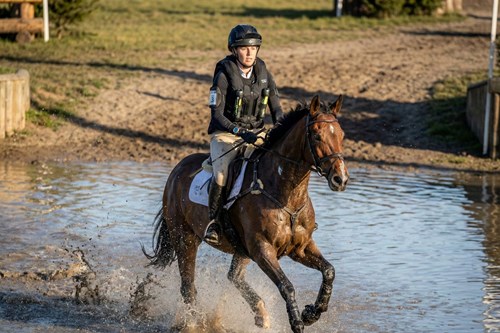
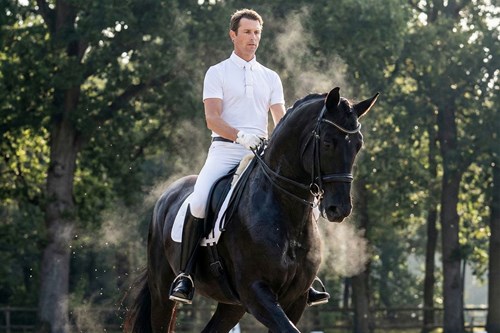
From outside you will seem like put and glued to the saddle, but your body will partly be stiff and holding, and partly be very flexible to absorb the movements and within that harmony and a lot of happening on the saddle an outside observer will barely notice you doing anything. That’s how a good and professional rider looks.
Arms and the hands: This part also took me long to understand. While my instructor kept shouting hold your hands still, my horse wouldn’t let me do so, and with the natural movement of the head during various gaits, how on earth would it be possible to hold my hands still. Again, it takes time here to FEEL the horse’s mouth (the key word is to feel!) in order that you will not pull it so hard or let it loose. There is a very sensitive balance between the two and you can only learn it in time by practicing and opening your perception channels to feel it. And between pulling and letting loose, you want to be on the pulling side without hurting the horse’s mouth or giving him a wrong “brake or stop” signal. You can hear instructors saying “have the horse in your hands a little bit”. This is to let him know you are in control and you are the captain in this ride. The horse needs to trust you and this is how you transmit that to him.
Going back to the mouth connection; It shall feel more or less like this: Find a heavy chair, find something that look like reins, can be a piece of rope or cloth, or belt, doesn’t matter. Put around your reins through the top of the chair and lift the two front legs of the chair gently by pulling and leaning the chair towards yourself. Don’t overpull or don’t let it touch the ground. Try to hold it slightly off the ground. You will feel a light pressure on your hands because you are lifting the chair and not letting it go, hence your reins are straight and tight. This is the amount of pressure and connection you want on your horse’s mouth! He will feel you, but you will not hurt him by over pulling, and your reins will be always straight and connected! Once you achieve this on the horse, the job is done! But then comes the tricky part. As the horse moves, how will you keep that balance, pressure and straight reins. The answer is simple, but yet again it can only be achieved by practice. Your hands will be very soft and silent (silent means you shall not pull or release) but stay still at the right and same pressure point letting your hands move back and forth with horse’s mouth and movement. This is very important, you try to feel the horses mouth, remember the straight lines and pressure from the chair, and fix it there and try to keep that pressure level and feeling at the same level as the horse moves. I know, not easy, but that’s how it is done. And the secret to do so, is to let the movement happen at the elbows and not on the hands! You might hear from different resources that the hands of the rider belong to the horse. This is what they mean. You move with very soft elbows, keeping the hands steady and silent.
Finally! The connection and the bond with your horse:
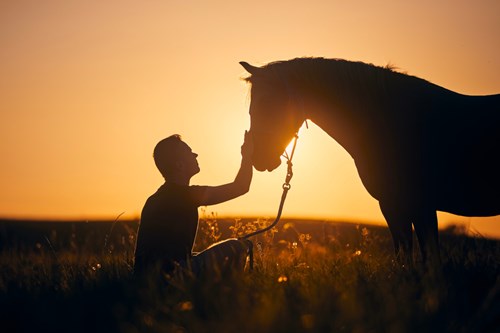
Once you’ve worked through the points above, the most magical part begins—the bond between you and the horse. For those who have watched Avatar, it feels exactly as the scene where the rider gets attached to the creature and they feel like one. This needs a lot of listening! Listening the horse and feeling him, and again happens in time, but once you establish the bond, it is the most wonderful thing in the world. You literally become one, and you start feeling each other. His legs become your legs, it is you making the canter, it is you turning and galloping and to me, this is “true riding”. Until you reach this connection, riding is mostly just trying to stay balanced or going on a simple trail ride.
Once you develop the bond, the true riding starts and it becomes something you can hardly give up. All riders would understand what I am saying, and maybe that’s why they are so pasionate about riding and horses.
I hope my experience helps fellow beginners facing the same struggles, and that my journey can make yours a little easier.
To all riding friends—enjoy the ride!
P.S: The reason I have mentioned always he/him for the horses above is simply because I learned riding with my beloved geldings Consentio and Abracadabra (so no offense to mare owners, they are wonderful as well and I am sure they will be as good). I owe a lot to them, first of all for being so patient against me and bearing with me for my bad riding through time…