DESIGNED BY RIDERS, FOR RIDERS


Riding Helmet Selection Guide: Safety, Fit, and Performance
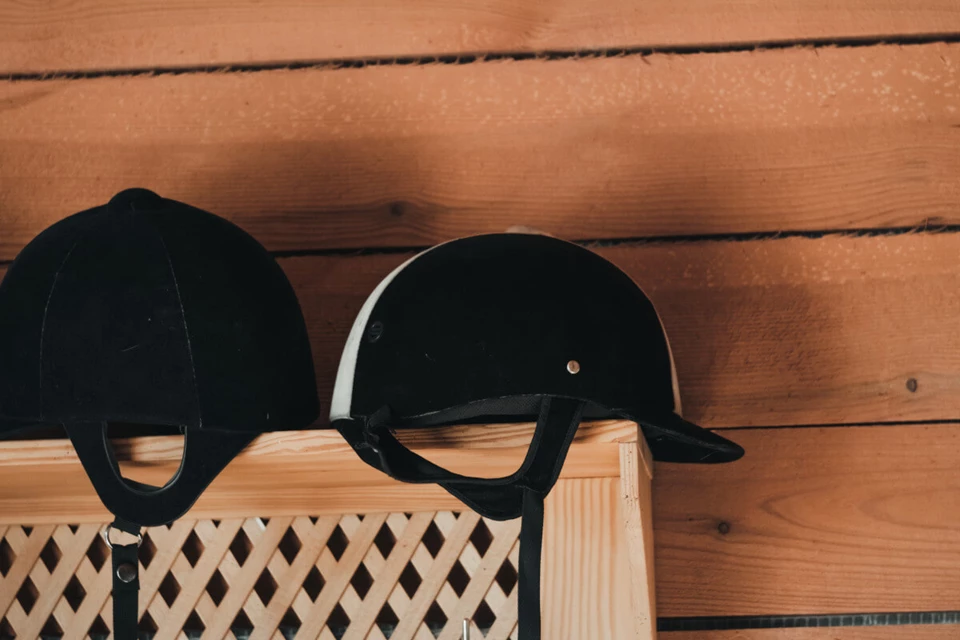
Given the high-risk nature of equestrian sports, utilizing equipment that technically dampens the impact of blows to the head area during a potential fall and protects the skull is a fundamental responsibility that protects the rider's physical health while sustaining the noble and empathy-based ethical relationship established with the horse. Head safety is a priority for athletes at every level. Proper protective gear is a sign of individual awareness. A riding helmet minimizes the risk of trauma in accidents. Selecting this equipment requires a focus on technical data. This guide provides the necessary standards from a technical perspective.
Correct Helmet Size and Placement Analysis
Measuring the head circumference, which is the first step in finding the right helmet, is the most critical technical process that starts from the center of the forehead, passes over the ears, and millimetrically determines the line surrounding the widest area of the skull to ensure the helmet remains stable on the head. Proper helmet size detection is essential. A soft measuring tape should be used for this process. Place the tape at the very center of your forehead. Pass it approximately two centimeters above your ears. Circle the widest point at the back of your head. Repeat the measurement several times. Use the highest result as the final basis.
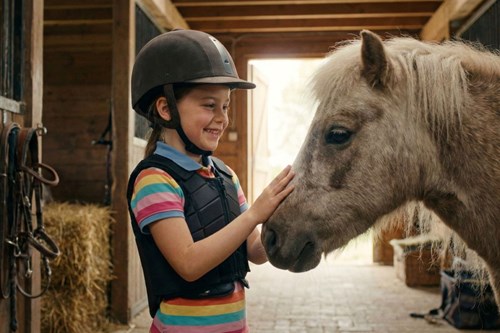
A riding helmet should sit on the head in a balanced and snug manner. The front edge of the helmet should sit approximately one finger width above the eyebrows. The visor must remain parallel to the ground. The equipment should not squeeze the head excessively. Pressure points create discomfort. The helmet must remain stable when you move your head. Straps must securely grip the jawline.
Fit Check Steps:
-
Place the helmet on your head.
-
Do not lock the chin strap yet.
-
Move the helmet slightly forward and backward.
-
The size is not suitable if the helmet moves independently.
-
Two fingers should fit under the strap when it is locked.
Loose helmet use creates a serious safety risk. The helmet can shift out of place during an impact. This situation completely eliminates the protective feature. The equipment should not come off your head easily. Check the strap tension before every ride for your safety. Manufacturer size charts provide a technical reference during this process.
Riding Helmet Certification and Technical Standards
Verifying the existence of technical safety approvals that prove the impact absorption capacity and structural integrity through international tests, rather than focusing solely on the external appearance or aerodynamic lines of a helmet, is the primary duty of every rider who respects the process and the nature of the horse. A riding helmet certification shows that the product was tested in a laboratory environment. These approval documents are usually found on the label inside the helmet lining. Uncertified products jeopardize equestrian safety. Standards guarantee the impact distribution performance of the helmet. Tests measure the helmet's resistance to violent impacts from different angles.
Primary certifications followed for equestrian safety:
-
VG1: The current European Union safety standard.
-
ASTM F1163: A technical approval document based in North America.
-
PAS 015: A standard originating from the United Kingdom that includes very demanding tests.
-
CE EN 1384: Represents the basic European safety framework.
In certified equestrian equipment, the outer shell is produced from high-resistance polymers. The inner layer consists of expanded polystyrene (EPS) foam that absorbs the impact. This foam crushes upon impact to absorb the energy. The energy is directed away from the rider's skull. The structural integrity of a helmet is considered compromised once it takes an impact. Even if there is no visible damage, the helmet must be replaced.
Technical Selections According to Riding Discipline
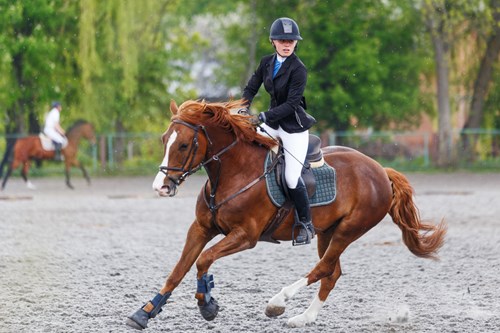
Since the types of impact encountered in different branches of equestrian sports and the field of vision needed by the rider vary, high ventilation capacity stands out in show jumping, while protective layers combined with aesthetics in dressage and maximum durability in field riding gain priority. Selecting a riding helmet suitable for your discipline supports riding comfort. Each discipline has its own technical requirements.
Show Jumping and Dynamic Structure
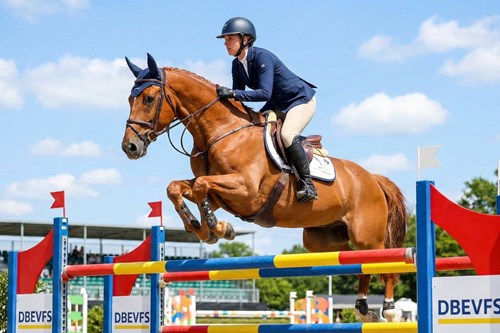
To protect the rider's focus during show jumping and minimize the load on the neck muscles caused by the weight in the head area, helmet models with aerodynamically developed air channels and lightweight carbon fiber components should be preferred. Lightness reduces fatigue in this discipline. Wide-brimmed models protect vision from the sun. Ventilation channels prevent sweating during intense training. Impact absorption levels must always be at the highest standard.
Dressage and Classic Aesthetics
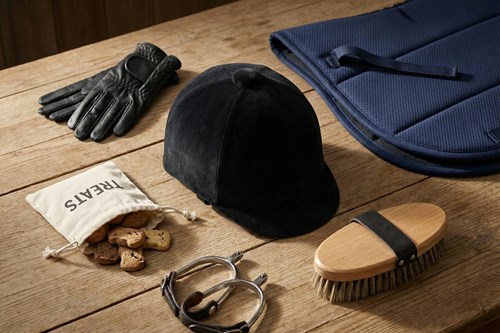
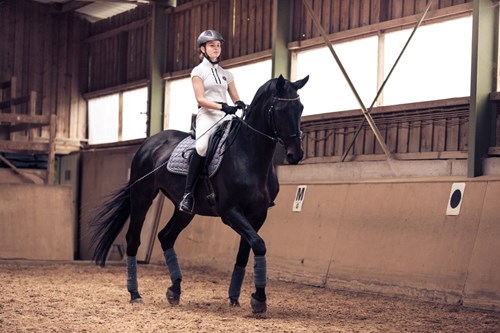
In dressage training where harmony and grace are at the forefront, helmet designs that house the most up-to-date safety technologies in their inner layers while maintaining visual integrity with traditional matte or velvet outer coatings meet professional expectations. Design is usually simpler in dressage models. Dark tones such as black or navy blue dominate. Elegance and high protection combine in these models. Dressage helmets stand out with their classic lines in equipment sets.
Field Riding and Durability
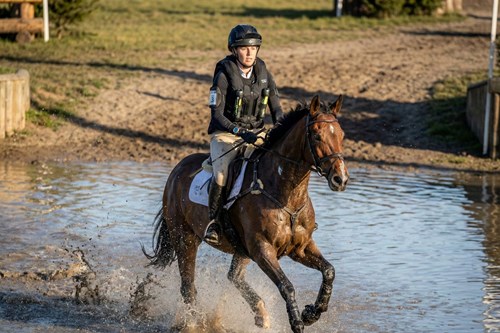
Using models that are usually brimless or have flexible brims, ensuring the rider remains in a stable alignment and has maximized impact resistance during cross-country or field riding, is a technical choice that reduces the risk of snagging during a fall. The protection area usually extends towards the neck area in field helmets. The outer shell of the helmet is extra reinforced against impacts. A brimless structure reduces rotational pressure on the neck during a fall. These products are tested according to the toughest terrain conditions.
Comparison of Helmet Features by Discipline
|
Discipline |
Primary Technical Need |
Preferred Feature |
|
Show Jumping |
Aerodynamics & Ventilation |
Lightweight Shell / Wide Visor |
|
Dressage |
Aesthetic Harmony & Traditional Style |
Matte Surface / Compact Design |
|
Field (XC) |
Maximum Impact Resistance |
Brimless / Deep Neck Protection |
|
Leisure Riding |
Comfort & Flexibility |
Adjustable Internal Mechanism |
Advanced Protection Technologies and Hygiene Management
The use of models equipped with advanced protection technologies like MIPS, which aim to reduce the effect of rotational forces within the helmet on brain tissue, is directly related to the vision of building a healthier and safer future for both rider and horse. MIPS technology allows the inner layer to rotate slightly upon impact. This movement absorbs the rotational energy transmitted to the brain. This technology takes safety to a higher level in advanced equipment. Focus on such innovations when examining technical specifications.
Helmet hygiene is a critical element for long-term comfort:
-
Inner liners must be removable and washable.
-
Antibacterial fabrics prevent odor formation.
-
Helmet ventilation should ensure rapid evacuation of sweat.
-
Special solutions that do not damage the equipment should be used for cleaning.
-
Damp equipment should be dried in a place with airflow, away from direct sunlight.
Equipment Lifespan and Technical Maintenance Principles
The fact that the protective properties of the polymers and protective foam layers that determine the structural life of a riding helmet are lost as a result of exposure to UV rays, moisture, and temperature changes over time reveals the necessity of renewing this equipment every five years. Helmets have a limited useful life. The outer shell can develop micro-cracks over time. The inner foam layer can lose its flexibility. The life of a helmet ends immediately upon impact. Take care not to hit hard surfaces to protect your equipment.
Technical Maintenance Recommendations:
-
Store the helmet in a dry area at room temperature.
-
Keep away from high heat sources (radiators, etc.).
-
Use only water and mild soap for shell cleaning.
-
Special helmet bags should be preferred during transportation.
-
Check for sagging in the inner foam at regular intervals.
Respect for the equestrian discipline begins with the importance given to safety. Worn or damaged equipment cannot perform its protective duty. Investment in equestrian equipment is an investment in the rider's health and commitment to the sport. Every rider should know the technical equipment most suitable for their own body and discipline.
Cavalier San Marco advocates for an approach based on knowledge and transparency. Your safety is the cornerstone of the ethical and compassion-oriented relationship you will establish with your horse. Protecting yourself is part of the respect you have for the future of this noble sport and horse welfare. Stay more peaceful and safer in every ride with the use of a helmet that complies with technical standards.